

Why the problem isn’t Gen Z. It’s the innovation operating model
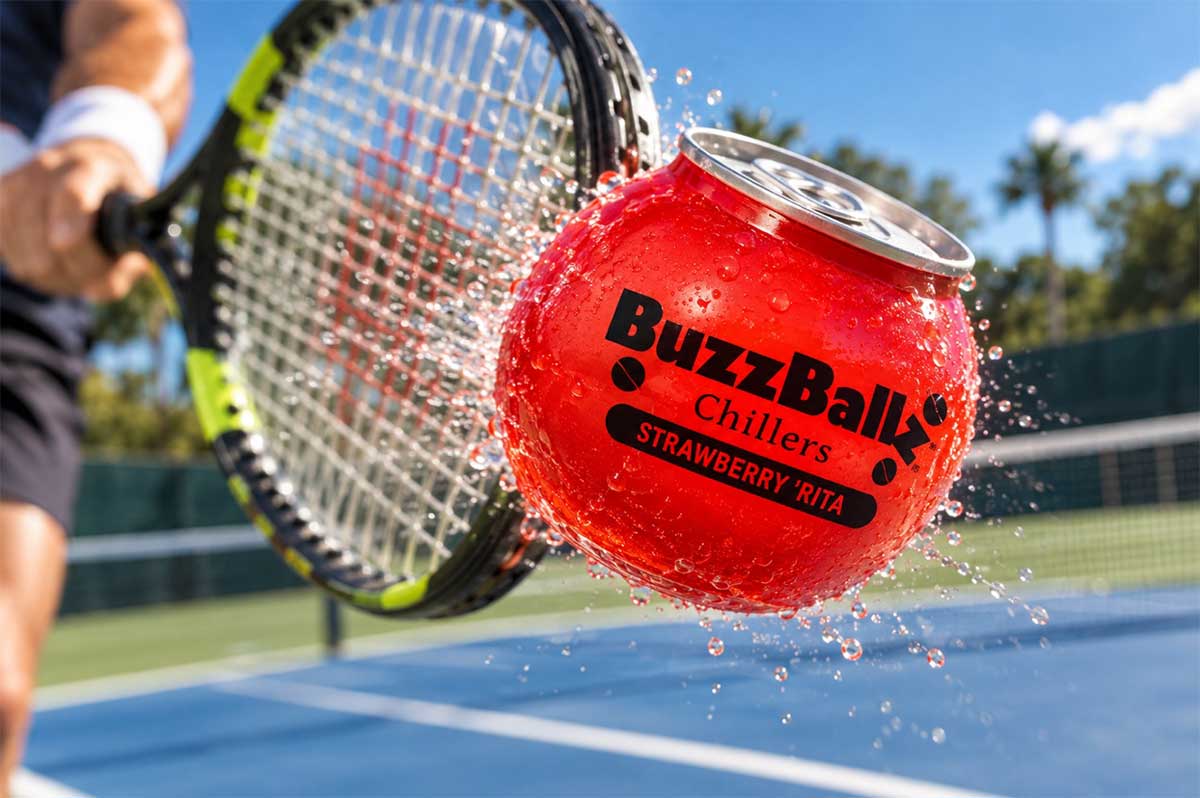
We all know young people are drinking less. It’s a real trend, but it doesn’t explain why Big Booze is finding the current environment so tough. It isn’t holding back BuzzBallz, which grew US sales 65.6% to $569 million in a year and now outsells its nearest RTD rival by a quarter of a billion dollars. Meanwhile Diageo has posted a 2% organic sales decline, scrapped its medium-term growth target and announced $1 billion in cost cuts.
In our view, this has less to do with consumers and more to do with how big alcohol companies are built to compete and how their innovation operating model is set up. If you’re asking why your new products keep failing, the answer is usually inside the building. That matters, because an external threat is something you weather, while an internal mistake is something you fix. Every one of the issues below is self-inflicted, which is the good news buried in an uncomfortable set of numbers.
1. Premiumisation isn’t a growth strategy
For the best part of a decade the industry took price in lockstep, with margin doing the growth work while volumes flatlined. It worked until the cycle turned, because it misread what consumers wanted. In an inflationary, post-Covid world, people wanted more for less, not the same for more. That’s a pricing decision the category made collectively, and one it can un-make.
2. Heritage doesn’t create demand
New entrants with no track record are delivering better branded experiences on products that are, in liquid terms, at parity. Big players have spent years protecting what matters least to the consumer in front of them (provenance, process, a founder’s portrait) while under-investing in the new thing, the occasion and the moment. BuzzBallz would never have cleared the stage-gate of a major drinks company, because it meets none of the internally derived criteria those processes are built around. That’s not a flaw in BuzzBallz, it’s a flaw in the criteria built into the innovation engines of big booze players, but they can easily be rewritten.
3. Stop selling a story. Start selling moments to photograph
Legacy brands keep telling their back story: the distillery, the process, the founder. Increasingly, few people care. What works is an experience so good that people record it, share it and want to repeat it. Most consumers aren’t shopping for a liquid but for an occasion, and the brand’s job is to own it. The moment is what gets photographed, and the photograph is what does the marketing now. This isn’t a capability gap, it’s a habit, and habits are the most fixable thing on this list.
4. Consumers buy occasion-specific experiences not categories
Big Booze legacy portfolios are organised by category: a whisky division, a vodka division, a tequila division. That’s an artefact of how the P&Ls have always been drawn, not of how consumers choose. Challengers compete on occasion. BuzzBallz isn’t stealing tequila or vodka drinkers; it’s stealing the occasion itself, from brands that don’t register it as competition because it sits outside their category review. Redrawing that review around occasions is a redesign, not a rescue, and innovation opportunity mapping around occasions rather than liquid types is the place to start.
5. Distribution is the only advantage that’s left
Acquisition has increasingly replaced genuine innovation. Sazerac didn’t buy BuzzBallz’s recipe, which Merrilee Kick had already proven for over a decade. It paid more than $500 million for the acceleration only its distribution network could provide. Start-ups and challengers do the innovating and brand-building, while the big players bring scale and route-to-market.
There’s no halfway house. Either a business embraces being a distribution platform and gets ruthlessly good at spotting and scaling outside bets early, or it builds a repeatable innovation process that can originate again. Doing a bit of both, while telling a heritage-innovation story the acquisition pattern contradicts, is a decision being deferred.
6. Risk-taking beats cost-cutting
Cost programmes are necessary, but they aren’t a growth plan. With growth targets scrapped and the market down, there’s little left to protect, which makes it the moment to swing the bat rather than tighten the belt. That means backing bold brand positioning, funding challenging innovation and greenlighting disruptive execution. Those are exactly the moves a heritage-protective stage-gate is built to block, which is why improving innovation outcomes starts with the engine, not the ideas.
7. Don’t always tackle new spaces with the brands you have
The instinct of Big Booze is to extend their flagship brands into growing spaces – like non-alc or RTD. You understand why – the challenges of creating a new-to-world brand or acquiring one mean the knee-jerk reaction is to line-extend. However, that quietly caps the opportunity before the work begins, building in compromise from the beginning. Just because a legacy brand could play in that new space it doesn’t mean it’s the optimal solution to capture the full opportunity. That’s what designing commercial innovation propositions properly means: start with the consumer and the occasion at the heart of the opportunity, then decide whether an existing brand, a new one or something else is the right vehicle.
8. One operating model doesn’t fit all
Finally, Big Booze cannot treat total beverage alcohol as one business, run on one playbook. FMCG discipline works because the feedback loop is short: read this quarter’s sell-through, adjust next quarter’s production. Whisky and tequila don’t have that lever. Laying down aged spirit commits capital years before you know whether the demand still holds. Beer and RTD are closer to FMCG in speed, but they’re bought for image and occasion as well as function. A portfolio holding both needs two models running at once. That’s an organisational design and innovation operating model decision, not a market constraint.
The takeaway
None of this is really about Gen Z drinking less, and none of it makes the case that alcohol is in irreversible decline. Every issue above was built by Big Booze, for reasons that made sense at the time, and every one can be unbuilt by the same companies on their own initiative. Nothing here requires the consumer to change, the market to recover or a competitor to slow down.
The honest strategic question isn’t “how do we make our brands feel more Gen Z?”, it’s this: which of our own internal systems would have killed BuzzBallz if we’d invented it ourselves? On present form, every one of them would have. The reassuring part is that every one of them is also within the industry’s power to change. An innovation performance diagnostic, or innovation health check, is the quickest way to find out what’s holding you back. As an FMCG innovation consultancy with over 25 years’ experience in the drinks industry, we’re well placed to help you get your innovation engine ready to take on all-comers.
If any of this feels familiar, we’d love to talk. Get in touch at hello@mangrove.team.