

Written live from the Innovation Roundtable Summit, Copenhagen
I’m writing this between coffee breaks in Copenhagen, where the Innovation Roundtable Summit has delivered a perfectly balanced diet of pastries, good conversation, and the letters “AI”. Every session, every panel, every chat by the coffee machine: AI will speed up ideation, AI will cut costs, AI will write the business case before you’ve finished your croissant.
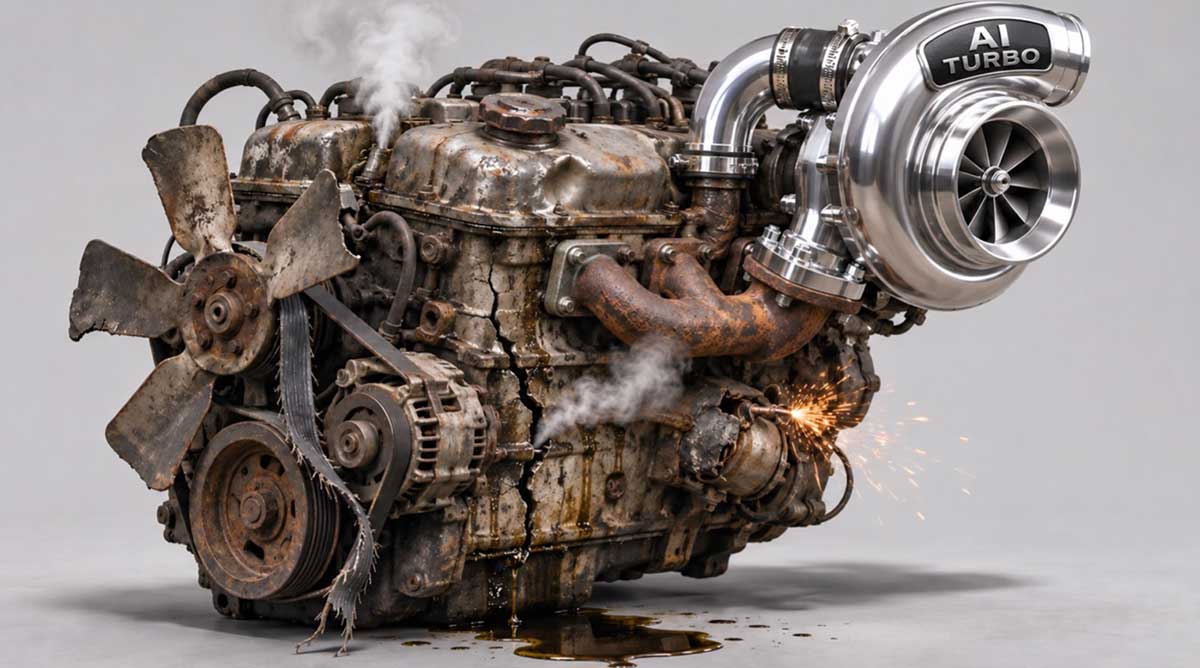
And honestly? Much of it is exciting. But somewhere around the third “game-changing” slide, a thought crept in: we might be about to build a very fast car on a very wonky engine.
The speed trap
The pitch is seductive: do innovation quicker, with fewer people, for less money. Who could argue with that?
Well, here’s the awkward bit. If your innovation performance is held back by fundamentals, such as unclear priorities, projects that never quite die, teams pulling in different directions, or decisions made by whoever shouted loudest, then AI doesn’t fix any of that. It just helps you get to the same disappointing results faster. You’ll launch the wrong things sooner. You’ll kill the right things more efficiently. Congratulations, you’ve optimised the wrong thing.
Doing more of what doesn’t work, at pace, isn’t a strategy. It’s a very productive way to be disappointed.
It’s (mostly) a people thing
Here’s what rarely makes the conference keynote: most innovation challenges are people challenges.
- Do your teams actually agree on what “good” looks like?
- Are the right people in the room when decisions get made, and do those decisions stick?
- Is there a culture where it’s safe to stop a project, or does everything limp on out of politeness?
- Do your resources follow your priorities, or your politics?
No algorithm can resolve these for you. AI can surface insights, but it can’t make a leadership team brave, or get a stubborn stakeholder on board, or untangle a process that’s been accreting complexity since 2009.
Enter: remapping the engine
This is why we talk about Remapping the Innovation Engine. It means stepping back and looking at every part of how you innovate, from strategy and portfolio choices to governance, capabilities, culture, and how you deploy your resources, then tuning it all to work together.
The goal isn’t just to be faster. It’s to improve your success rate and squeeze maximum impact from the people, time, and budget you already have. When the engine is well mapped, the right ideas get oxygen, the wrong ones get a dignified exit, and teams spend their energy on things that matter.
Then, and only then: add the turbo
Here’s the good news. Once the engine is sorted, AI becomes brilliant. It amplifies a healthy system instead of accelerating a muddled one. Clear priorities mean AI is pointed at the right problems. Aligned teams mean its insights actually get used. Good decision-making means its speed turns into real advantage rather than faster chaos.
Fix the engine first and AI is a turbocharger. Skip that step and it’s a very expensive way of revving in neutral.
So, what should you do next?
Before you sign up for the next shiny AI tool, ask yourself a slightly unglamorous question: where is our innovation engine actually losing power? Be honest about the people, process, and priority issues. Fix those, and you’ll get far more from AI than any of the keynote slides promise.
Right, the next session is starting, and I’m told there’s an AI panel. I’ll sit near the pastries.
Want to talk about remapping your innovation engine? Get in touch with the Mangrove team.